
Learning how to up your game at the London Games Festival

We are honoured to have been a part of The London Games Festival in April. #LGF22 was the latest annual celebration that spans multiple events across multiple days, from early looks at new indie games, showcasing experimental game designs for investors, and bringing creators and players together for W.A.S.D. Following a two-year absence it proved a welcome return for UK game developers, and over an exciting ten days I found myself very proud of the Bafta Awards for shining a light on diversity and inclusion throughout the event.
Day 1: Taking game development in the cloud to The Next Level
The Next Level was London Games Festival’s face-to-face conference and networking event, featuring a series of talks, panels and demos looking at the future of games. Most of these sessions are available to stream on YouTube, so be sure to check them out and take advantage of the learnings they have to offer. However, I’d like to cast a spotlight on two talks in particular.
Building and expanding the Hitman Trilogy with Azure
Speaking about how the studio is using Azure to support the Hitman Trilogy, Christian Corsano, Senior Online Programmer at IO Interactive, said that it was a vital support to their small team.
“We did not want to manage a lot – we wanted to let the platform work for us”
Christian explains that the Hitman Trilogy uses a variety of different Azure features. For example, they use Azure App Service to run a Configuration Gateway, which gives them incredible flexibility to redirect players to different game branches, all written in a simple .NET Core program.
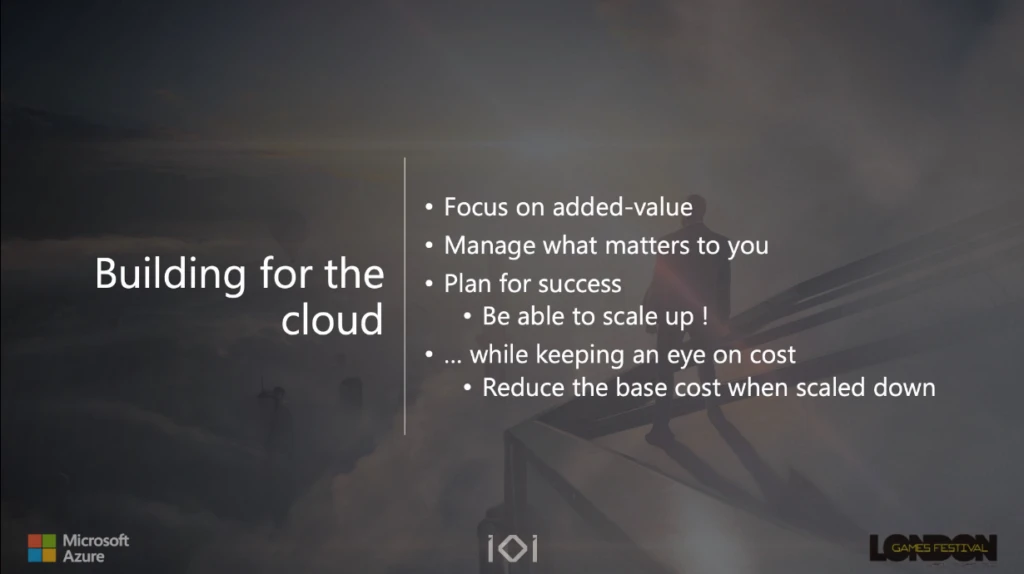
He also explained how the team collects metrics about how the game runs and how players are experiencing the games, all using a simple ASP.NET program in Azure App Service that pushes data to Azure Event Hubs. These analytics are then further analysed by using Azure Stream Analytics for near real-time processing.
Christian covers even more in his session, including a further look into architecture, how the team uses DevOps and automation, as well as how they used LiveOps to keep players invested in the Hitman trilogy. Be sure to watch the full recording over on YouTube.
Building the Future of 3D Collaboration
Later in the event, Microsoft’s Metaverse Lead Alex Karim held a session on mixed reality, the future of 3D collaboration and the move from individual to shared experiences. He kicked off the session with a bold statement:
“We see mixed reality as the next evolution of computing”
The pandemic has shown us just how invaluable tools like Microsoft Teams are for collaboration when you can’t physically be in the same space as your colleagues. In the future this will be just one way you can work; tools like Microsoft Mesh will allow you to work even closer with people when they can’t be there with you.
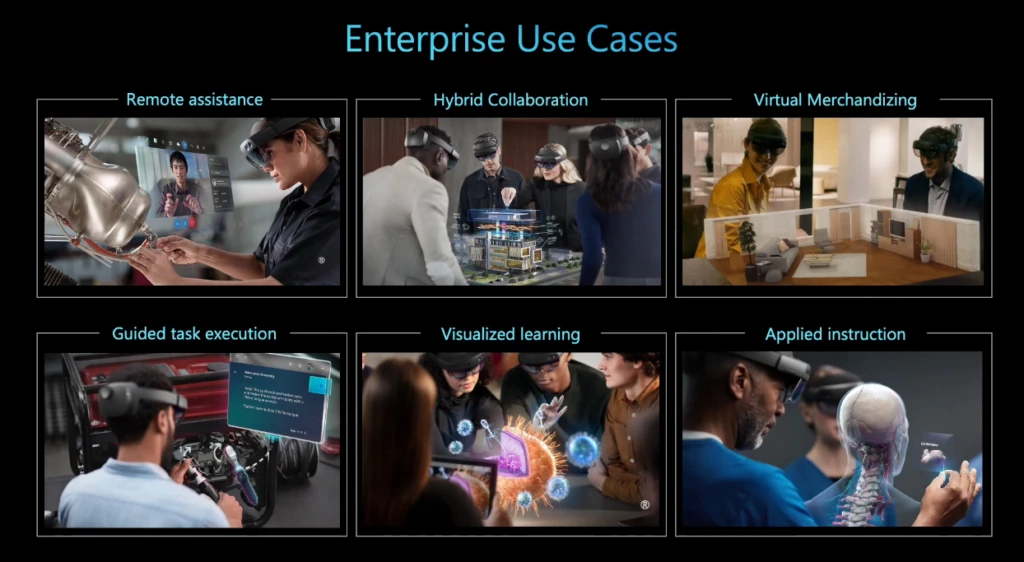
People can use Microsoft Mesh from a multitude of devices, whether that’s HoloLens 2, a traditional VR headset or your mobile phone – all you need is a Mesh-enabled app. This could be joining people in the same virtual space, providing assistance while sharing someone else’s view, or simply collaborating on a group project.
Alex also showed off Microsoft’s new Holoportation technology, which lets you bring in a photorealistic model of yourself so that you can interact with others as if you’re truly in the same room together.
This look into the future of 3D collaboration is truly fascinating, so be sure to view the full session on YouTube.
Helping you on your game dev journey
Last month at the Game Developer Conference we announced the launch of ID@Azure, a new programme to help independent game developers and creators use the cloud. This program offers free tools, resources, and support to quickly get game developers started using cloud services.
With ID@Azure we want you to take advantage of the same services and capabilities used by the teams building some of the most popular games today. Working with the cloud opens a lot of possibilities for the development of your game, so we hope you check it out.