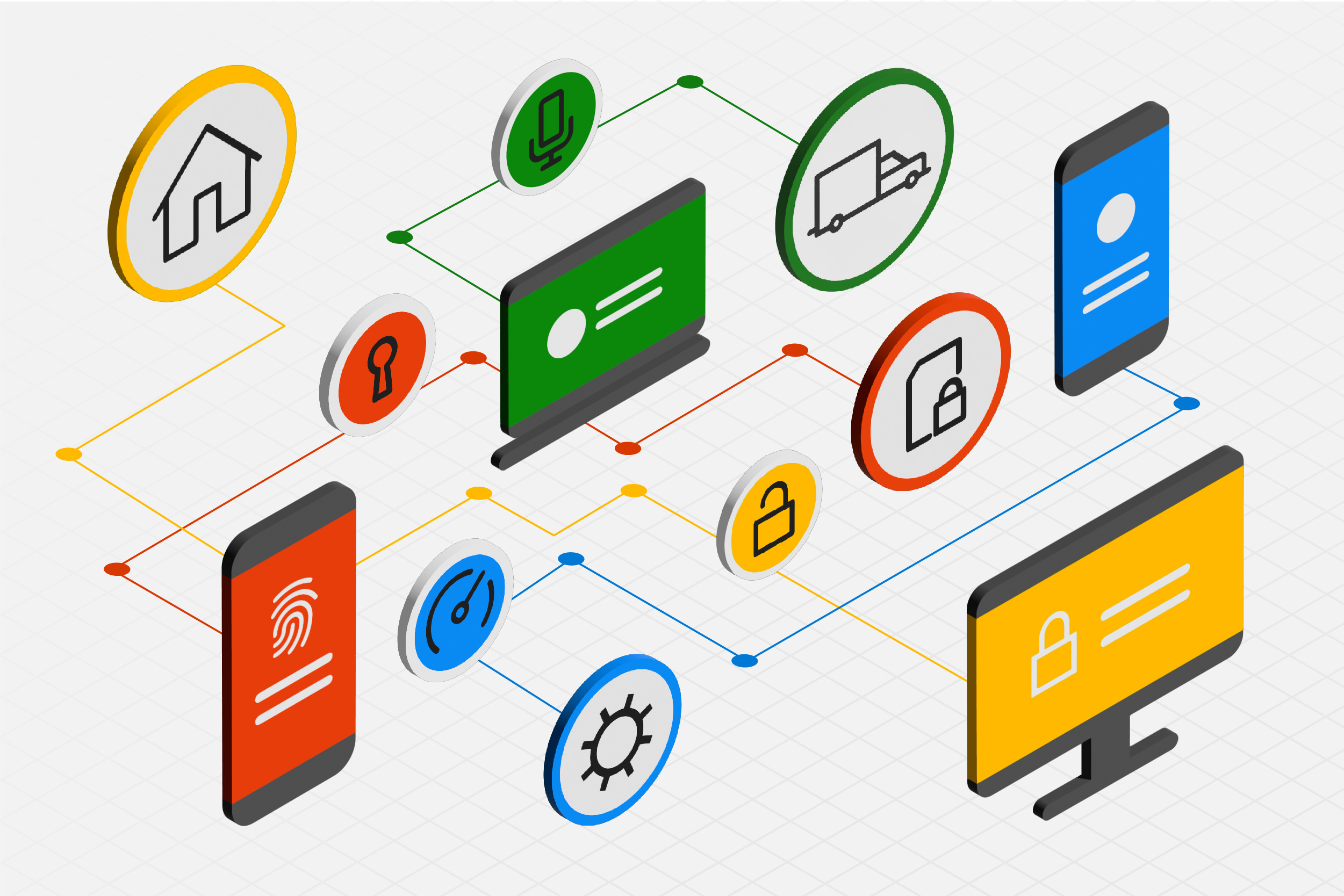
Today, the third edition of Cyber Signals was released spotlighting security trends and insights gathered from Microsoft’s 43 trillion daily security signals and 8,500 security experts. In this edition, we share new insights on wider risks that converging IT, Internet of Things (IoT), and operational technology (OT) systems pose to critical infrastructure. Cyber Signals presents new data on these risks with practical recommendations for enterprises.
OT is a combination of hardware and software across programmable systems or devices that interact with the physical environment (or manage devices that interact with the physical environment). Examples of OT can include building management systems, fire control systems, and physical access control mechanisms, like doors and elevators.
With increasing connectivity across converging IT, OT, and IoT increasing, organizations and individuals need to rethink cyber risk impact and consequences. Similar to how the loss of a laptop or modern vehicle containing a homeowner’s cached Wi-Fi credentials could grant a property thief unauthorized network access, compromising a manufacturing facility’s remotely connected equipment or a smart building’s security cameras introduces new vectors for threats like malware or industrial espionage.
With more than 41 billion IoT devices across enterprise and consumer environments expected by 2025—according to International Data Corporation (IDC) research1—devices such as cameras, smart speakers, or locks and commercial appliances can become entry points for attackers.
As OT systems underpinning energy, transportation, and other infrastructures become increasingly connected to IT systems, the risk of disruption and damage grows as boundaries blur between these formerly separated worlds. Microsoft has identified unpatched, high-severity vulnerabilities in 75 percent of the most common industrial controllers in customer OT networks, illustrating how challenging it is for even well-resourced organizations to patch control systems in demanding environments sensitive to downtime.
For businesses and infrastructure operators across industries, the defensive imperatives are gaining total visibility over connected systems and weighing evolving risks and dependencies. Unlike the IT landscape of common operating systems, business applications, and platforms, OT and IoT landscapes are more fragmented, featuring proprietary protocols and devices that may not have cybersecurity standards. Other realities affecting things like patching and vulnerability management are also factors.
While connected OT and IoT-enabled devices offer significant value to organizations looking to modernize workspaces, become more data-driven, and ease demands on staff through shifts like remote management and automation in critical infrastructure networks, if not properly secured, they increase the risk of unauthorized access to operational assets and networks.
David Atch, Microsoft Threat Intelligence, Head IoT and OT Security Research, highlights in this edition’s profile that to address IT and OT threats to critical infrastructure, organizations must have full visibility into the number of IT, OT, and IoT devices in their enterprise, where or how they converge, and the vital data, resources, and utilities accessible across these devices. Without this, organizations face both mass information disclosure (such as leaked production data of a factory) and the potential elevation of privilege for command and control of cyber-physical systems (such as stopping a factory production line). He shares additional insights in the Cyber Signals digital briefing where we take a deeper dive into wider risks that converging IT, IoT, and OT systems pose.
Securing IoT solutions with a Zero Trust security model starts with non-IoT specific requirements—specifically ensuring you have implemented the basics to securing identities and their devices and limiting their access. These requirements include explicitly verifying users, having visibility into the devices on the network, and real-time risk detections.
Learn more
Read the third edition of Cyber Signals today.
We hope these resources are helpful in understanding and managing this evolving risk. To learn more about IT, OT, and IoT threats and explore the latest cybersecurity insights and updates visit Security Insider.
To learn more about Microsoft Security solutions, visit our website. Bookmark the Security blog to keep up with our expert coverage on security matters. Also, follow us at @MSFTSecurity for the latest news and updates on cybersecurity.
1The Growth in Connected IoT Devices is Expected to Generate 79.4ZB of Data in 2025, According to a New IDC Forecast, Business Wire. June 18, 2019.